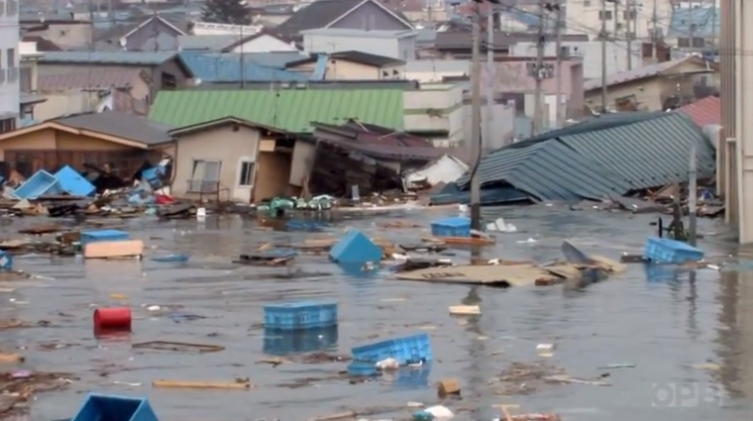
Expected Impacts: Oregon

As is stated on the Expected Impacts: Regional page, it can be hard to visualize the impacts of a magnitude 9.0 Cascadia megathrust earthquake hitting the Pacific Northwest. What will it be like for families? For businesses? This page provides some estimates specific for Oregon that help conceptualize the aftermath of this eventual disaster. The colored full-length bars are “buttons” that link to the resources.
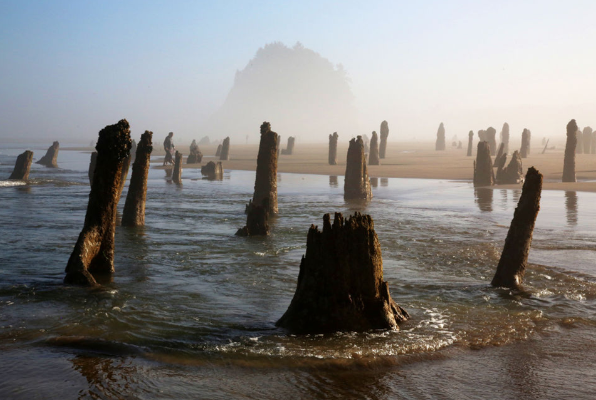
In January 2025, the Oregon Department of Geology and Mineral Industries (DOGAMI) published the Earthquake and Tsunami Impact Analysis for the Oregon Coast. It is worth an entire read through! County summaries from the publication are copied below. DOGAMI also published the Earthquake and Tsunami Impact Analysis for Coastal Clatsop County, Oregon in 2020.


“The fault is building up pressure and has the potential to produce a magnitude 8.0 to 9.0 earthquake with five to seven minutes of shaking and a tsunami.”

“About one million Oregon residents are expected to be displaced when the CSZ occurs.”

Curious what the shaking may be like in your home? What might fall down? What might move around? Check out this 3-D simulation where you can go inside this home and explore each room—and see hazards that exist if items aren’t properly secured.

Cascadia Earthquake House by Oregon State University Extension Service on Sketchfab

Watch this movie. Seriously.


And this one…

The recent failure to pass Oregon House Bill 3402 (ODOT) has the following impacts1:

  • $354 million short of maintaining current functions and staffing
  • Cutting nearly 1,000 employee positions across the agency
  • Closure of 17 of ODOT’s 88 maintenance stations.
  • Increased crash response times and longer highway closures.
  • Longer response times to emergency events like flooding, wildfires and winter storms.
  • More potholes, rougher roads and lower speed limits.
  • Higher risk of water on the roadway with increased risk of erosion damage and pavement failure.
  • Higher fire risk and reduced visibility from a reduction in mowing and other vegetation management.
  • Reduced camp cleanup by two thirds from current levels, reduce graffiti removal and reduced litter pickup in urban areas – eliminating it entirely in rural areas.
  • Fewer edge line markers on low volume roads.
  • More frequent signal failures.
  • The elimination of bridge painting or washing.
  • Reduced illumination on roadways and paths to lower utility costs.
  • Eliminated fleet equipment replacement resulting in reduced reliability and increased repair costs.
  • Ability to only be able to purchase roughly 50% of the winter materials (e.g. salt, deicer, abrasives). This would result in reduced service levels on interstates and major highways and little to no service on less traveled roads.

The images below come from Oregon’s 2024 County Roads Needs Study by the Association of Oregon Counties (AOC)2. It discusses funding shortfalls over the next five years, rather than just a biennium view given in the bullets above. In looking at the aging infrastructure, it becomes clear how critical these funds were to maintaining current infrastructure. Without the package, it cost the state three to twelve times the amount of money to fix infrastructure down the road (see 4th image in the slideshow below), even if disasters don’t make things worse, as those figures are based on the impact of aging alone.

However, that infrastructure will be weaker and therefore also more likely to fail in a major earthquake. At a time when we need to be increasing infrastructure mitigation efforts — those that work to lessen the impact of a natural disaster like Cascadia — we are taking a serious step backwards. It will make recovery all the more difficult and expensive.

  1. ODOT Structural Revenue Issue Driving Deep Potential Budget Cuts:
    https://www.oregon.gov/odot/About/Documents/ARB_Explained.pdf
  2. Oregon’s 2024 County Roads Needs Study by the Association of Oregon Counties (AOC): https://drive.google.com/file/d/12XGHJQuC6T_0Q6KyWzC63ou9wVg4GbXN/view

Fatality estimates for a CSZ event, provided in the 2013 Oregon Resilience Plan (resource listed in the next section), range from 1,250 to more than 10,000. Since the plan was published, the Oregon Department of Geology and Mineral Industries (DOGAMI) has released updated figures—and the estimates are much higher now. The upper limit just for Oregon exceeds 80,000 fatalities. (To learn more (including ways to prepare and stay safe!), check out this Story Map. 🌊)

Estimates can be a tricky thing. For example, the Oregon Resilience Plan’s 2013 estimates included only residents and took into account a medium-sized tsunami. The more current DOGAMI estimates include non-residents and look at a variety of tsunami sizes. But even with that broadened range, it’s hard to capture the full nuance of what’s possible. Take, for example, DOGAMI’s estimates for Clatsop County in Oregon, shown below. The maximum number of fatalities for the county is listed at 27,407… which is undoubtedly a devastating number. However, even this number is based on averages for visitors and residents.

Nate Wood, a supervisor of the WGSC Hazard Vulnerability Team that specializes in societal-vulnerability science, geospatial modeling, and web mapping applications at the USGS Western Geographic Science Center, presented at the January Cascadia CoPes Hub / RCN Monthly Seminar Series. In his presentation, he points out that upward of 40,000 people could potentially die in the city of Seaside if the earthquake and tsunami happened during the annual Hood to Coast event. Seaside is a city in Clatsop County, so you can see how a single event could drastically change the averages above event the worst case shown in DOGAMI’s estimates.

Nate Wood goes on to say, “This is not just a census question. This is a Hood to Coast, Carnival Cruise, Seafood Festival issue. The Port of Tacoma has like 18,000 people that could probably die from a Tacoma Fault related tsunami.” The time of day, saturation of soils, and time of year play incredible roles in this outcome. And so do peoples reaction/response times. Getting out of the way of the tsunami BEFORE it hits is the best chance of survival.

Casey Zuzak, GISP NHRAP Senior Risk Analyst, Risk Management Directorate, Resilience for the Federal Emergency Management Agency (FEMA), also presented during the seminar and provided the following chart. Those who don’t get caught in the tsunami water remain save from the tsunami… so getting to high ground and going inland after the shaking is critical. However, those who don’t make it to safety in time will face injury or death—which one can depend on how deep the water is where they are (2 meters = 6.56168 feet) so again, getting to high ground, even if you can’t escape the water completely, can help lower your risk of death.


Have you ever wondered what impacts the earthquake will have on Central Oregon? It can be hard to imagine a fault 50 miles offshore that runs nearly parallel to the coastline, causing shaking in Bend, Oregon. That’s the power of a Cascadia megathrust earthquake. Central Oregon Daily News produced this two-part series highlighting the expected impacts for cities and the region’s role in the aftermath. Food, fuel, and other supply availability will be impacted and the second video offers suggestions for getting prepared.

Oregon State University Professor Emeritus Chris Goldfinger is interviewed in the first video. According to Professor Goldfinger, Central Oregon community members will be able to feel the shaking. It will be more gentle than what communities in the West experience. He describes it as:

“feeling long rolling like you are on a boat dock… Even small accelerations, when applied to unreinforced masonry-type buildings, may be enough to do significant damage, and it’s really going to be a case-by-case basis.”


Oregon’s buildings, transportation network, utilities, and population are simply not prepared for such an event.

“In their current state, our buildings and lifelines (transportation, energy, telecommunications, and water/wastewater systems) would be damaged so severely that it would take three months to a year to restore full service in the western valleys, more than a year in the hardest-hit coastal areas, and many years in the coastal communities inundated by the tsunami. Experience from past disasters has shown that businesses will move or fail if services cannot be restored in one month; so Oregon faces a very real threat of permanent population loss and long-term economic decline.”

Earthquake fatalities: 650 – 5,000Displaced households: 27,600
Tsunami fatalities: 600-5,000Tons of debris: 10,000,000 (1 million dump truck loads)
Buildings completely destroyed: 24,000Highway bridges built without seismic consideration: 982
Buildings completely destroyed: 24,000Additional highway bridges not built to “Cascadia-level” seismic requirements: 1,179
Buildings with extensive damage: 85,000Businesses location in the tsunami inundation zone: ≈1,900 (employing nearly 15,000 people)
Economic loss: $32,000,000,000Housing units location in the tsunami inundation zone: ≈10,500 ( housing 22,000 people)
Public school buildings with high or very high risk of collapse = ≈1,000public safety buildings with high or very high risk of collapse = 1/4 of those evaluated

Scenario: magnitude 9.0
Epicenter: 95 miles west of Eugene, OR (45.73 N, 125.12 W)
Fault ruptures: to the north at 2.5 km/second
Event occurs: February 6, 2012, 9:41 am PST

Fire stations completely destroyed: 200 – 253Fire conflagrations in urban areas force the evacuation of thousands within the first 72 hours. *Note, this is not within summer wildfire season!
Injuries resulting from structural collapses: 25,000Hospitals with complete damage: 1 – 9
Hospitals with extensive damage: 2 – 10Hospitals with moderate damage: 10 – 25
  • On-hand medical supplies, including blood within Oregon, will be exhausted within 48 hours.
  • Every coastal hospital will either be completely or extensively damaged in this scenario. Most facilities in the Willamette Valley and Southern Oregon will suffer complete to moderate damage
  • Landslides and earthquake damage will make all roads over the coast range and many in the I-5 corridor impassable. Railroads will be severely damaged and seaports will either be destroyed or severely damaged. Because of these impacts, air operations will be critical.

“Casualty estimates are assumed to occur within hours of the earthquake (as opposed to days after the earthquake). Estimates, which include permanent residents and visitor populations, are for a summer “night” (i.e., 2 AM) when visitor populations are high. It is important to note the modeling assumes that all persons quickly evacuate by foot using the most optimal tsunami evacuation route; these estimates are not a worst-case scenario.”

More in-depth data on tsunami-related injury and fatality estimates can be found on Surviving Cascadia’s Tsunami page.


“A nearby earthquake could drop the low-lying regions of the coast several feet below sea level. The highest tsunami waves could reach 80 feet and severely flood coastal communities near beaches, bay mouths, and low-elevation coastal plains. Oregon’s at-risk population is approximately 40,000 on the outer coast, excluding tourists and visitors that seasonally swell the population manyfold.”

“New tsunami simulations indicate that the largest waves may run up to elevations twice as high as earlier models predicted and flooding may inundate hundreds of yards farther up coastal valleys.”


According to the Oregon Seismic and Safety Policy Advisory Council (OSSPAC), “A full 9.0 megathrust Cascadia earthquake and resulting tsunami will create an unprecedented magnitude of emergency need… Reaching impacted populations, many of whom will be isolated, will present a level of operational complexity our state and country have never seen before… We currently have low resilience and low capacity to provide for the enormous emergency response that will be needed to support those most highly-impacted by a Cascadia event… We are not prepared if a Cascadia event happens in the near future.”


“Of 5,350 state facilities evaluated in an earthquake hazard zone, 838 building were flagged as extensively or completely damaged following a CSZ event… totaling over $1.3 billion in potential damage to property. Among the 1,647 critical state facilities, 360 were flagged as extensively or completely damaged.”

“The 10 counties projected to incur the most loss and damage due to a CSZ earthquake (most to least): Multnomah, Lane, Coos, Washington, Marion, Benton, Lincoln, Josephine, Clatsop, and Jackson. Seaside is the most vulnerable coastal town.”


“90% of Oregon’s population of nearly 4 million people will be directly affected by a Cascadia earthquake and tsunami.”

“This event is predicted to destroy transportation and fuel infrastructure across the Pacific Northwest, cost Oregon more than $30 billion in direct and economic losses, and result in anywhere from 1,250 to more than 10,000 deaths.”


This system allows users to view landslide and liquefaction risks, expected shaking intensities, active faults and more. You can zoom in much more than the images below allow.
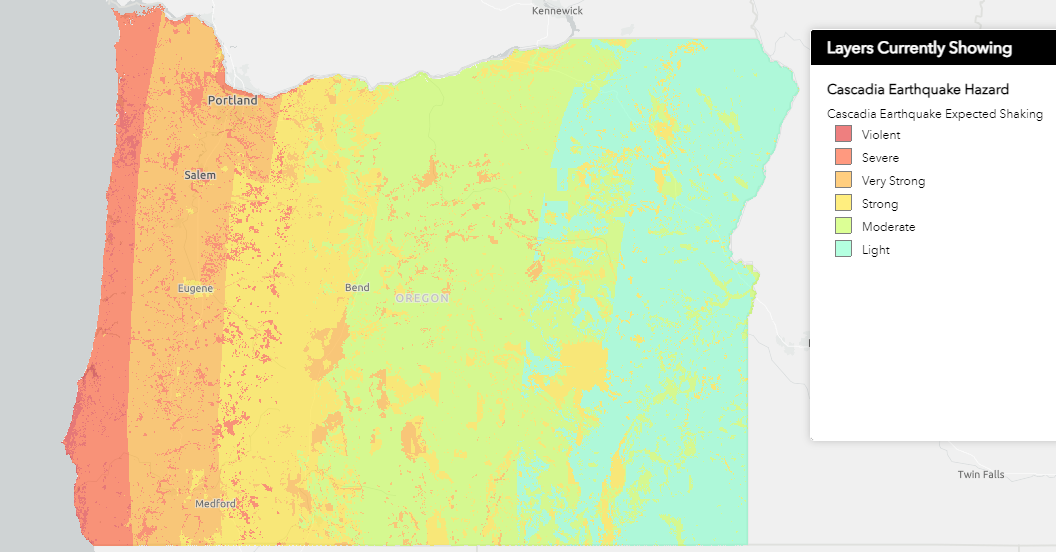
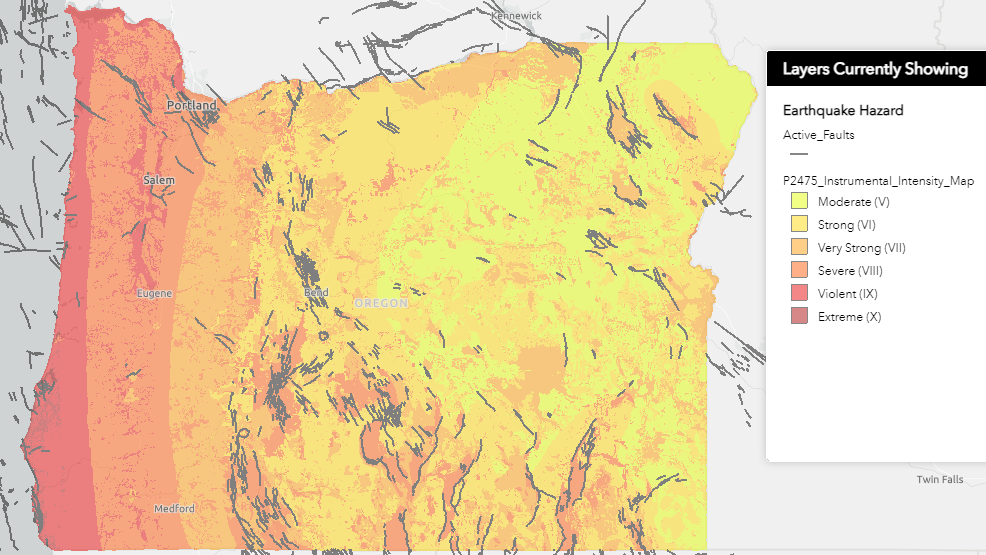
Check out OSU’s O-Help page to generate address-specific reports like the one shown here. Run it for your home, place of business, child’s school, etc. (Click section header for hyperlink)


DOGAMI offers maps for Landslide Susceptibility, Liquefaction Susceptibility, Peak Ground Acceleration, Peak Ground Velocity, Co-seismic Subsidence, Permanent Ground Deformation, and many more in an Open-File Report Series. Each map can be viewed and downloaded and allows the user to zoom in for finer details.


Ground shaking: 4 – 6 minutes
Tsunami reaches coast: as little as 15 minutes after shaking STARTS
Damaged structures: 10,000+
People in need of shelter: 10,000+
Economic losses: $50+ billion
Fatalities from earthquake and tsunami: ≈25,000